
Blog
Difference Between Pole Tents and Frame Tents
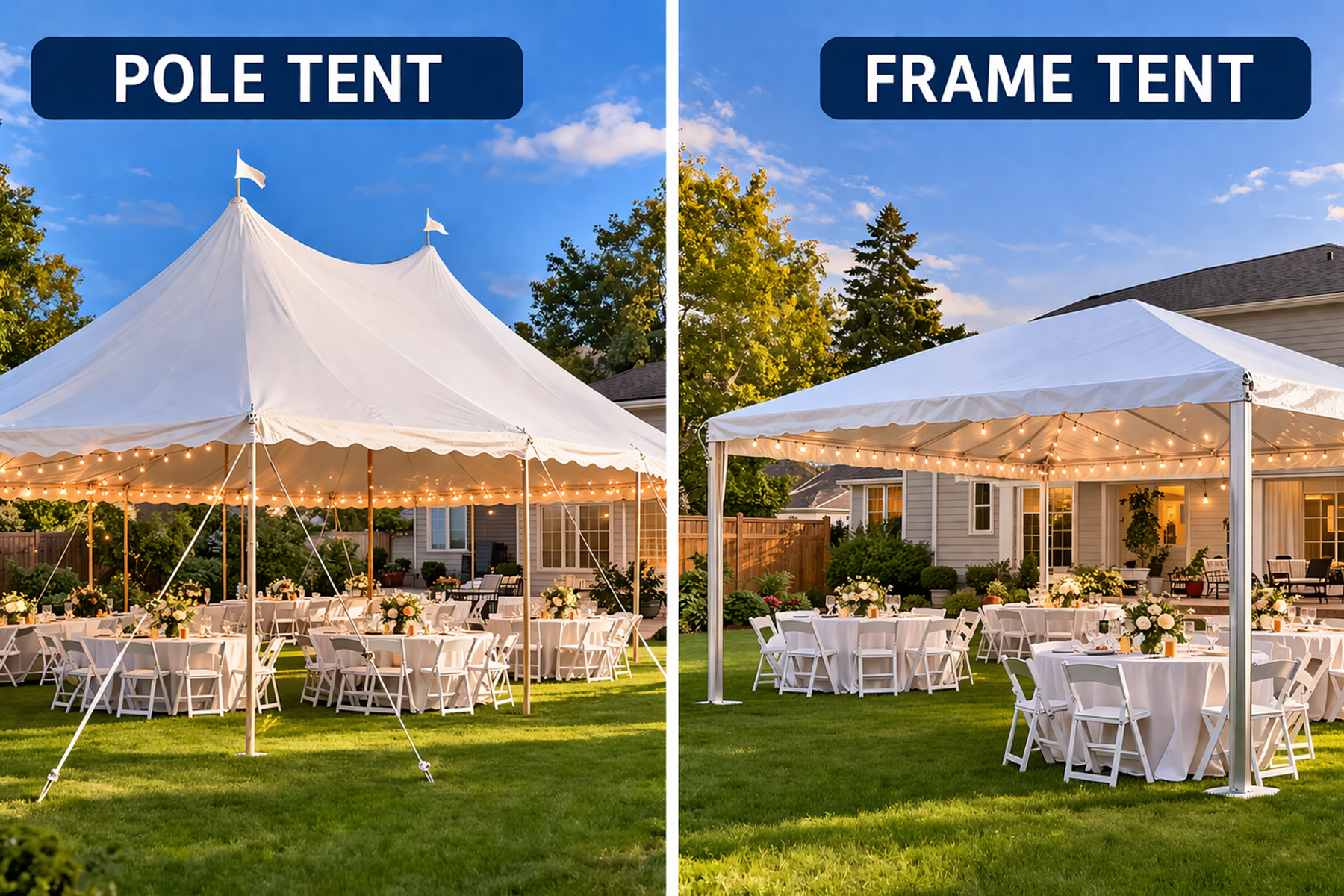
Pole Tents vs. Frame Tents: Understanding the Difference for Your Event in Caldwell and West Essex, NJ
Choosing the right tent is one of the most important decisions when planning an outdoor event. Two of the most common options are pole tents and frame tents. While both provide dependable shelter, they are built differently and work best in different types of spaces.
For backyard parties, graduations, weddings, and corporate events in Caldwell and West Essex, understanding the difference between pole tents and frame tents helps ensure your event setup fits your space, budget, and layout needs.
This guide explains how each tent works, their advantages, and when to choose one over the other.
What Is a Pole Tent?
A pole tent is a traditional tent style supported by center poles and perimeter stakes. These tents are known for their classic high peaks and elegant appearance.
How Pole Tents Work
Pole tents rely on tension created by:
- Center poles placed throughout the interior
- Side poles along the perimeter
- Stakes driven into the ground
- Tensioned ropes that hold the tent fabric tight
Because of this structure, pole tents must be installed on grass or another surface that allows staking.
Benefits of Pole Tents
Pole tents are widely used because of their appearance and affordability.
Classic High-Peak Appearance
Pole tents create tall, dramatic peaks that add visual appeal to outdoor events.
This makes them popular for:
- Weddings
- Graduation parties
- Backyard celebrations
- Community events
The peaks also help create an open, airy feel inside the tent.
Cost-Effective for Larger Events
Pole tents are typically more affordable than frame tents of similar size.
They often:
- Require fewer structural components
- Take less time to install
- Offer lower rental costs
This makes them an excellent option when planning larger gatherings.
Ideal for Open Lawn Areas
Pole tents perform best in wide, open spaces where staking is possible.
They work well for:
- Residential backyards with grass lawns
- School fields
- Parks
- Large outdoor properties
Limitations of Pole Tents
Although pole tents are popular, they do have certain restrictions.
Requires Ground Staking
Pole tents cannot be installed on:
- Concrete
- Asphalt
- Driveways
- Decks
- Patios
They also require extra space around the tent for staking and tensioning ropes.
Interior Center Poles
Pole tents include center poles that support the tent roof.
These poles:
- Cannot be removed
- Must be considered when placing tables
- May affect dance floor or seating layouts
Most layouts are designed to work around these support poles.
What Is a Frame Tent?
A frame tent is supported by a metal framework instead of interior poles. This allows the tent to stand without center supports, creating a completely open interior.
Frame tents are known for their flexibility and clean, modern appearance.
How Frame Tents Work
Frame tents rely on:
- A metal support frame
- Vertical legs along the perimeter
- A tensioned fabric top
- Anchors, stakes, or weights depending on the surface
Because they do not rely on tension from stakes alone, frame tents can be installed on multiple surfaces.
Benefits of Frame Tents
Frame tents offer versatility and layout flexibility.
No Center Poles Inside
One of the biggest advantages of frame tents is the open interior space.
Without center poles:
- Tables can be arranged freely
- Dance floors can be placed anywhere
- Guests have clear sightlines
- More usable space is available
This makes frame tents ideal for more complex event layouts.
Works on Multiple Surfaces
Frame tents can be installed on:
- Grass
- Asphalt
- Concrete
- Driveways
- Patios
This flexibility makes them a great option for homes with limited lawn space.
Fits in Tight Spaces
Frame tents require less surrounding clearance than pole tents.
They are often used when:
- Space is limited
- The tent must be placed near a building
- Obstacles such as fences or landscaping exist
Limitations of Frame Tents
Frame tents provide flexibility but may require additional materials and setup time.
Typically Higher Cost
Frame tents usually cost more than pole tents because they:
- Require a full metal support frame
- Take longer to assemble
- May require additional anchoring systems
However, the added flexibility often makes the investment worthwhile.
Pole Tents vs. Frame Tents: Side-by-Side Comparison
Understanding the key differences helps determine which tent type is best for your event.
Key Differences at a Glance
Feature
Pole Tents
Frame Tents
Setup Method
Staked into ground
Frame-supported
Center Poles
Yes
No
Surface Requirements
Grass required
Multiple surfaces
Appearance
High peaks and elegant look
Clean, modern look
Space Requirements
Needs staking area
Fits tighter spaces
Cost
Typically lower
Typically higher
Interior Flexibility
Limited by poles
Fully open layout
Both tent styles provide reliable coverage but serve different event needs.
When to Choose a Pole Tent
Pole tents are often the best choice when you have open lawn space and want a traditional look.
Ideal Situations for Pole Tents
Choose a pole tent when:
- Your event will be held on grass
- You have adequate space for staking
- You want a classic tent appearance
- You are hosting a large gathering
- Budget is a primary concern
Common Events That Use Pole Tents
Pole tents are frequently used for:
- Graduation parties
- Backyard weddings
- School celebrations
- Community gatherings
- Family reunions
When to Choose a Frame Tent
Frame tents are better suited for locations with space limitations or hard surfaces.
Ideal Situations for Frame Tents
Choose a frame tent when:
- The tent will be installed on concrete or asphalt
- Backyard space is limited
- You need flexible table placement
- You want an open interior layout
- The tent must be placed close to structures
Common Events That Use Frame Tents
Frame tents are commonly used for:
- Driveway parties
- Patio events
- Corporate gatherings
- Backyard celebrations with tight layouts
- Events requiring dance floors or entertainment areas
Choosing the Right Tent for Your Backyard Event in Caldwell and West Essex
Selecting between a pole tent and a frame tent depends on several key factors.
Consider the Surface Type
The ground surface often determines which tent type is possible.
Grass lawns allow pole tents, while hard surfaces typically require frame tents.
Consider the Layout Requirements
If your event includes:
- Dance floors
- Buffet tables
- Entertainment areas
- Structured seating layouts
A frame tent may provide more flexibility.
Consider Available Space
Measure both:
- The tent footprint
- Surrounding staking area
This helps ensure safe installation and proper spacing.
Final Thoughts: Selecting the Best Tent for Your Event
Both pole tents and frame tents are reliable choices for outdoor events in Caldwell and West Essex.
Pole tents provide a classic look and cost-effective solution for large lawn events. Frame tents offer greater flexibility and work well in tighter spaces or on hard surfaces.
Understanding these differences helps ensure your event layout works smoothly and your guests remain comfortable throughout the celebration.