
Blog
Commercial vs Non-Commercial Tents: What’s the Difference When Planning a Party in Verona and Cedar Grove
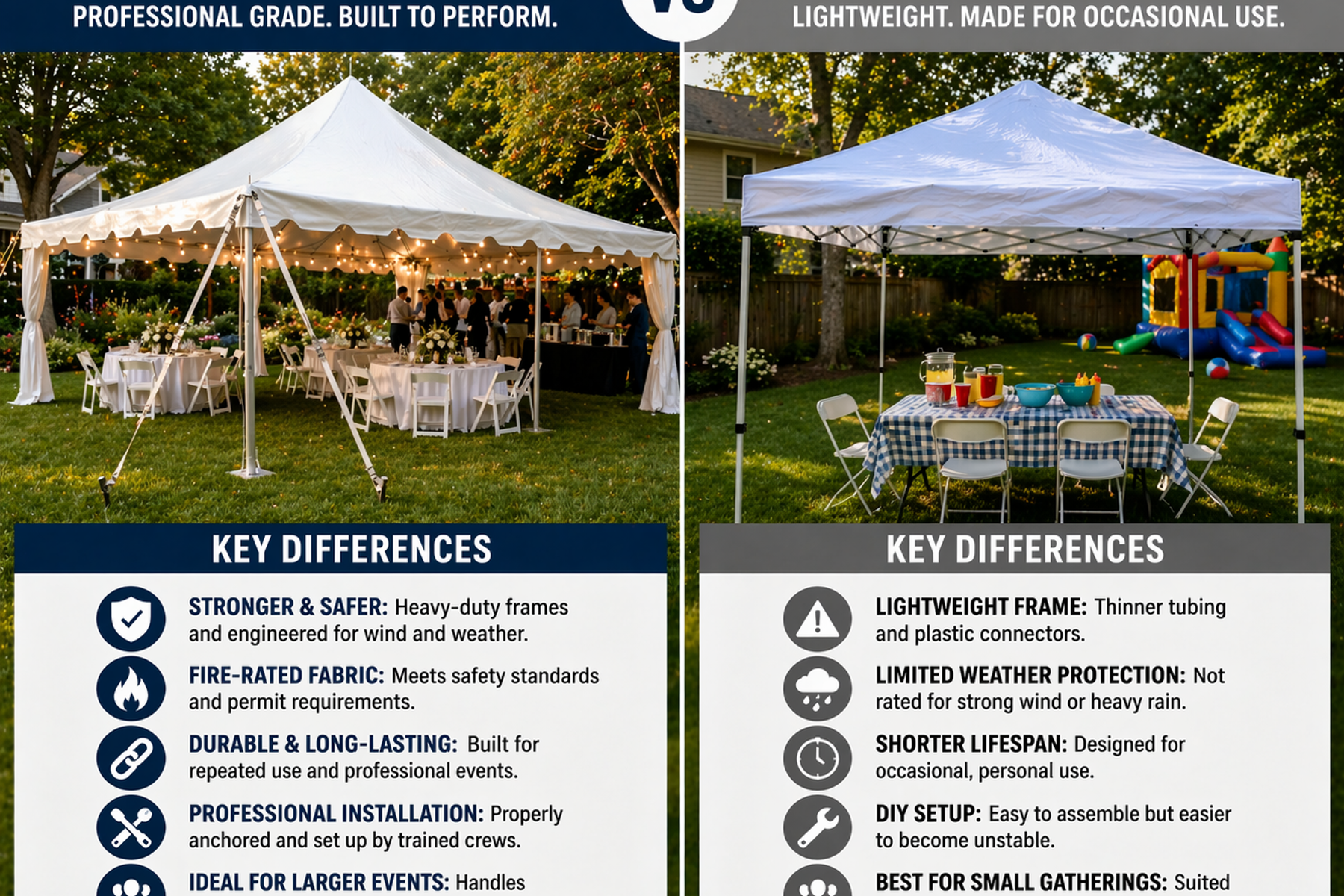
Commercial vs Non-Commercial Tents: What’s the Difference?
When planning a backyard event, one of the most important decisions you’ll make is choosing the right type of tent. Many homeowners search online and find inexpensive tents labeled for "party use," but not all tents are created equal.
Understanding the difference between commercial and non-commercial tents can help you protect your guests, avoid permit issues, and ensure your event runs smoothly—especially in areas like Caldwell and West Essex where weather and safety regulations matter.
What Is a Commercial Tent?
Commercial tents are professional-grade tents designed specifically for rental companies, large gatherings, and repeated use. These tents are engineered to meet strict safety and durability standards.
Built for Strength and Safety
Commercial tents are constructed using heavy-duty materials such as:
Reinforced Frames
Commercial frame tents typically use:
- Thick aluminum or galvanized steel frames
- Engineered connectors and fittings
- Wind-rated structural components
These materials allow the tent to withstand stronger winds and heavier rain compared to residential-grade tents.
Fire-Rated Tent Fabric
Commercial tent tops are:
- Fire-retardant certified
- UV-resistant
- Waterproof
- Tear-resistant
Fire ratings are especially important when permits are required or when heaters or lighting are used inside the tent.
Designed for Professional Installation
Commercial tents are not simple pop-up tents. They require:
- Proper anchoring systems (stakes or weighted ballast)
- Leveling and structural setup
- Trained installation crews
This ensures safety for guests and protects property from damage.
Used for Larger and More Formal Events
Commercial tents are typically used for:
- Graduation parties
- Weddings
- Christenings
- Corporate events
- Backyard milestone celebrations
They also support accessories like:
- Tent lighting
- Sidewalls
- Flooring
- Heating and cooling systems
What Is a Non-Commercial Tent?
Non-commercial tents are typically consumer-grade tents designed for occasional personal use rather than professional events.
Lightweight Construction
Non-commercial tents are usually made with:
- Thin steel or fiberglass frames
- Lightweight plastic connectors
- Basic canopy materials
These tents are designed to be inexpensive and easy to assemble, but not necessarily durable.
Limited Weather Resistance
Most non-commercial tents:
- Are not wind-rated
- May not be waterproof
- Can tear or collapse in moderate weather
Even light rain or wind can cause problems.
Not Intended for Large Gatherings
Consumer-grade tents are generally suitable for:
- Small backyard shade
- Temporary use
- Personal recreational activities
They are not ideal for:
- Large guest counts
- Food service areas
- Professional events
Key Differences Between Commercial and Non-Commercial Tents
Understanding the side-by-side differences helps clarify why commercial tents are the preferred option for most organized events.
Durability and Longevity
Commercial Tents
- Built for repeated use
- Designed to withstand weather
- Long-lasting materials
Non-Commercial Tents
- Designed for occasional use
- More prone to wear and damage
- Shorter lifespan
Safety and Structural Integrity
Commercial Tents
- Professionally installed
- Properly anchored
- Engineered for safety
Non-Commercial Tents
- Often self-installed
- Limited anchoring systems
- Higher risk of collapse
Safety becomes especially important when hosting children, elderly guests, or large crowds.
Permits and Local Requirements
In many New Jersey towns, including Caldwell and surrounding West Essex communities, tent permits may be required for certain sizes.
Commercial Tents
- Often meet municipal requirements
- Include fire-retardant certification
- Can be inspected if required
Non-Commercial Tents
- May not meet safety codes
- Often lack required documentation
- Could cause permit issues
Appearance and Professional Quality
Commercial Tents
Provide:
- Clean, elegant presentation
- Professional-grade appearance
- Compatibility with lighting and décor
Non-Commercial Tents
Often appear:
- Thin or uneven
- Less stable
- Less polished visually
For milestone events, appearance matters just as much as functionality.
Why Commercial Tents Are Worth the Investment
While non-commercial tents may appear less expensive upfront, they often carry hidden risks.
Better Protection From Weather
Weather in New Jersey can change quickly. A commercial tent provides:
- Reliable rain coverage
- Better wind resistance
- Secure structural support
This helps protect:
- Guests
- Food service areas
- Rental equipment
- Décor
Reduced Stress on Event Day
Professional installation eliminates guesswork.
Instead of worrying about:
- Assembly instructions
- Anchoring methods
- Stability concerns
You can focus on enjoying the event.
Safer for Larger Gatherings
Commercial tents are designed to safely handle:
- Larger guest counts
- Buffet tables
- Dance floors
- Equipment setups
This reduces liability risks and ensures peace of mind.
When a Non-Commercial Tent Might Be Acceptable
There are limited situations where a consumer-grade tent may be suitable.
Small Casual Gatherings
Non-commercial tents may work for:
- Small family picnics
- Backyard shade for a few guests
- Temporary daytime setups
However, even small events should consider safety risks if weather conditions change.
Short-Term Shade Use
If the goal is simply:
- Temporary sun coverage
- A small gathering area
- Minimal equipment underneath
A non-commercial tent might meet the need.
But for structured events, commercial tents remain the safer choice.
Questions to Ask Before Choosing a Tent
Selecting the right tent involves more than size and price.
How Many Guests Will Attend?
Guest count affects:
- Tent size
- Structural needs
- Safety planning
Larger groups benefit significantly from commercial-grade tents.
What Is the Weather Forecast?
Weather conditions influence:
- Anchoring requirements
- Sidewall usage
- Tent strength needs
Commercial tents provide greater reliability during uncertain forecasts.
Will You Need Permits?
Some towns require permits for tents over certain sizes.
Ask:
- Does my town require permits?
- Does the tent meet fire safety requirements?
- Will inspections be needed?
Professional rental companies typically assist with these requirements.
Final Thoughts: Choosing the Right Tent for Your Event
The difference between commercial and non-commercial tents goes far beyond price. It affects safety, durability, appearance, and overall event success.
For most organized backyard events—especially graduations, weddings, and milestone celebrations—commercial tents provide the reliability and professionalism needed to keep guests safe and comfortable.
While consumer-grade tents may work for very small, informal gatherings, investing in a commercial tent is often the smartest choice when planning an event that matters.
Making the right decision early in the planning process helps ensure your event runs smoothly, no matter what the weather or guest count brings.